汽车机油散热器损坏了怎么回事?多久更换一次?

NIBD
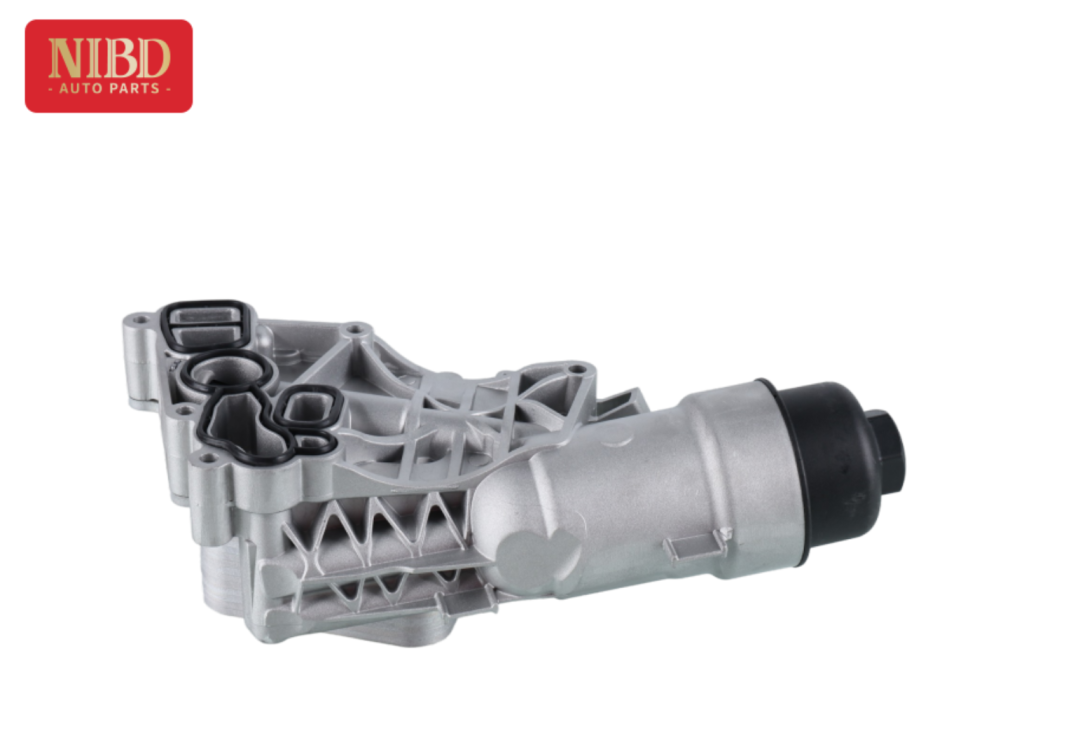
发动机高负荷运转时机油温度极易升高,若散热不及时,机油黏度、润滑性能会同步衰减,加速发动机内部零部件磨损。为稳定机油工作温度,发动机普遍配备机油热交换器,也就是大家常说的机油散热器。和水箱、空调散热系统相比,机油散热器一旦出现渗漏、堵塞或内部油水窜通,会对发动机造成严重损伤。
When the engine operates under high loads, the oil temperature can rise rapidly. If heat cannot be dissipated efficiently, the oil viscosity and lubrication performance will gradually decrease, accelerating wear on internal engine components.
To maintain stable oil operating temperatures, modern engines are commonly equipped with an oil heat exchanger, also known as an oil cooler.
Compared with the radiator and A/C cooling systems, the oil cooler plays a critical role in engine protection. Once leakage, blockage, or internal oil-coolant mixing occurs, it may lead to serious engine damage.
Part

01
机油散热器的工作原理
Working Principle of the Engine Oil Cooler
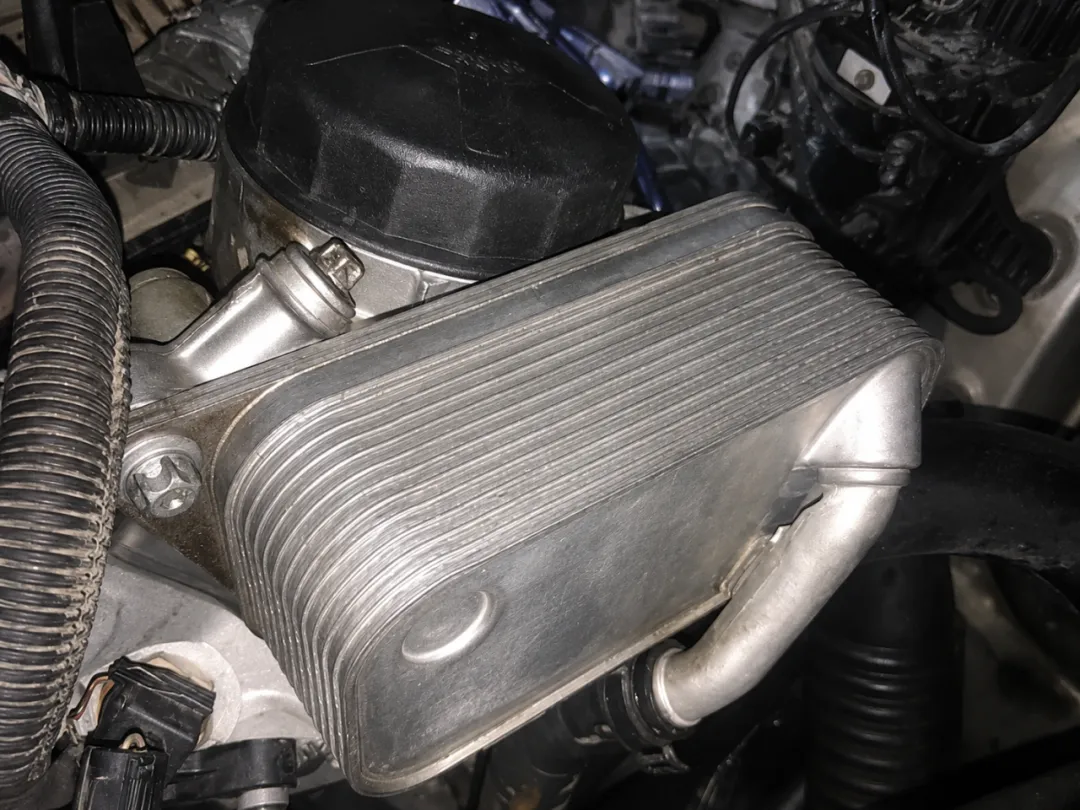
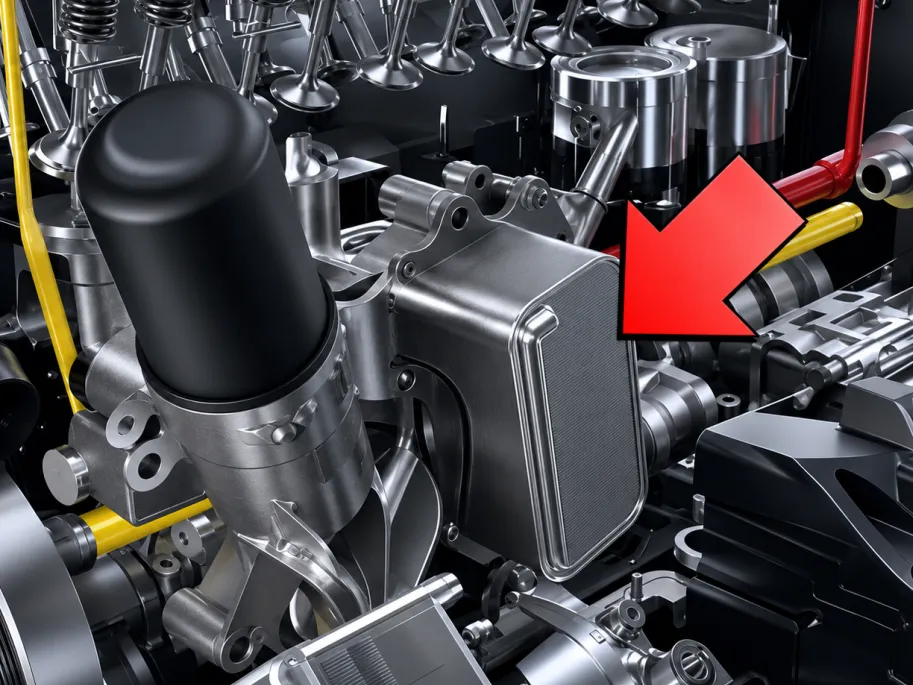
汽车机油散热器也叫机油冷却器,是调节发动机机油温度的重要热交换部件。车辆高负荷运转时,它可快速带走机油多余热量,使机油保持在相对稳定的工作温度,保障润滑系统稳定工作。
An automotive oil cooler, also known as an engine oil heat exchanger, is a critical thermal management component responsible for regulating engine oil temperature. Under high-load operating conditions, it efficiently dissipates excess heat from the oil, helping maintain a stable operating temperature and ensuring reliable operation of the engine lubrication system.
控制机油温
Regulate Engine Oil Temperature
机油温度过高会直接降低黏度、削弱油膜强度,容易造成发动机零部件润滑不足、磨损加剧。激烈驾驶、高速行驶、长时间爬坡等工况下,机油散热器可以及时带走机油中的多余热量,避免油温过高报警,使机油保持较为稳定的工作状态。
Excessively high engine oil temperatures reduce oil viscosity and compromise lubricating film strength, which can lead to insufficient lubrication and accelerated wear of internal engine components. Under demanding operating conditions—such as aggressive driving, sustained high-speed operation, or prolonged uphill driving—the oil cooler dissipates excess heat from the engine oil, helps prevent high oil temperature warnings, and maintains the oil within a stable and effective operating temperature range.
维持良好的润滑效果
Maintain Optimal Lubrication Performance
发动机曲轴、活塞和凸轮轴等部件需要依靠机油形成稳定的润滑油膜。机油温度处于合理范围内时,能够在零件表面形成具有足够强度的油膜,减少之间的摩擦与磨损。
Engine components such as the crankshaft, pistons, and camshaft rely on engine oil to form a stable lubricating film. When the oil temperature remains within the proper operating range, the oil can maintain sufficient film strength on component surfaces, thereby reducing friction and minimizing wear between moving parts.
辅助保护涡轮增压器
Help Protect the Turbocharger
机油温度过高会直接降低黏度、削弱油膜强度,容易造成发动机零部件润滑不足、磨损加剧。激烈驾驶、高速行驶、长时间爬坡等工况下,机油散热器可以及时带走机油中的多余热量,避免油温过高报警,使机油保持较为稳定的工作状态。
Excessively high engine oil temperatures can directly reduce oil viscosity and weaken oil-film strength, potentially resulting in inadequate lubrication and accelerated wear of internal engine components.Under demanding operating conditions—such as aggressive driving, sustained high-speed travel, or prolonged uphill driving—the oil cooler dissipates excess heat from the engine oil, helping prevent high-temperature warnings and maintain the oil within a stable operating temperature range.
Part

02
机油散热器为什么会损坏?
Common Causes of Oil Cooler Failure
01
密封件老化
Seal Degradation
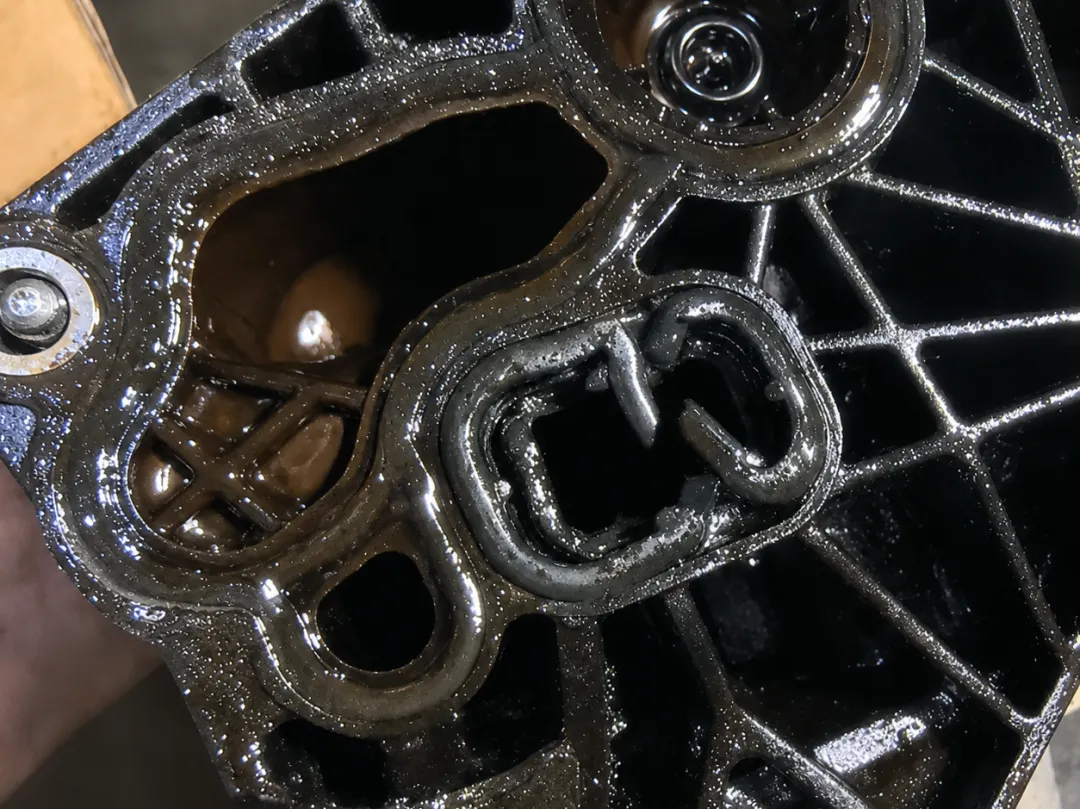
很多机油散热器通过密封垫、密封圈与发动机或机油滤清器底座连接。长期受到高温、高压以及冷热交替影响后,橡胶密封件容易出现硬化、变形或开裂,进而造成机油或冷却液渗漏。
Oil coolers are commonly connected to the engine assembly or oil filter housing by means of sealing gaskets and O-rings. Prolonged exposure to elevated temperatures and pressures, together with repeated thermal cycling, can cause these elastomeric seals to harden, deform, lose elasticity, or crack, ultimately resulting in engine oil or coolant leakage.
02
内部腐蚀
Internal Corrosion
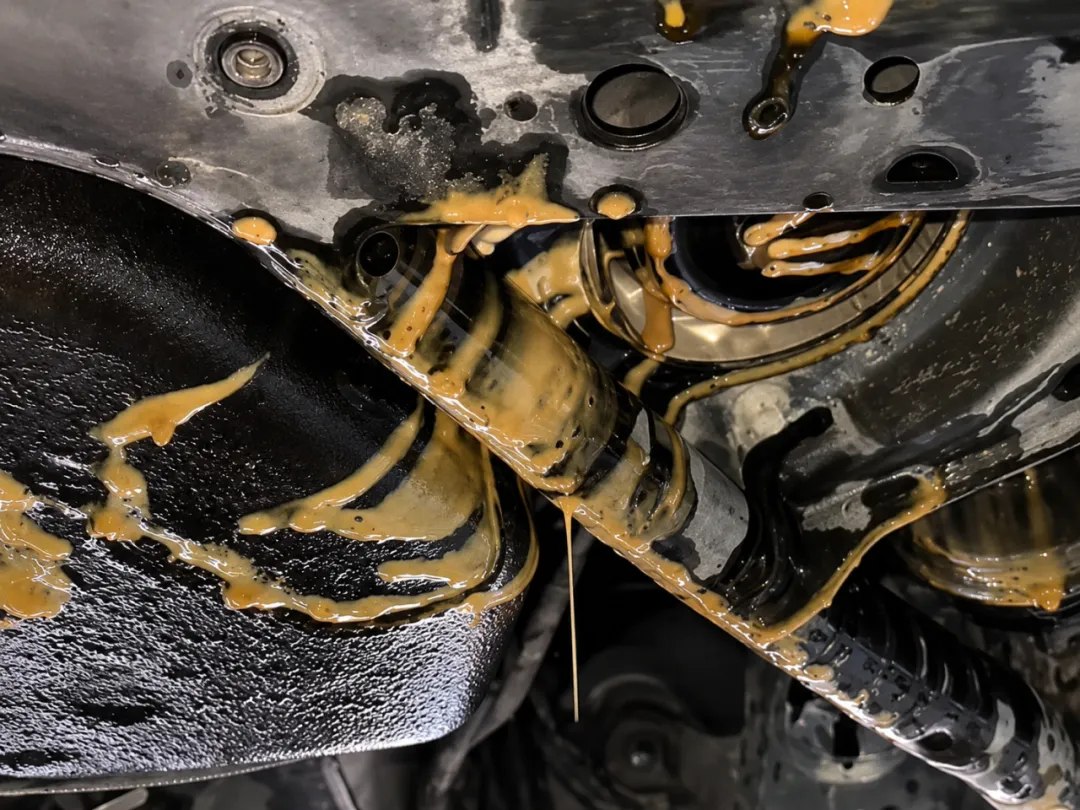
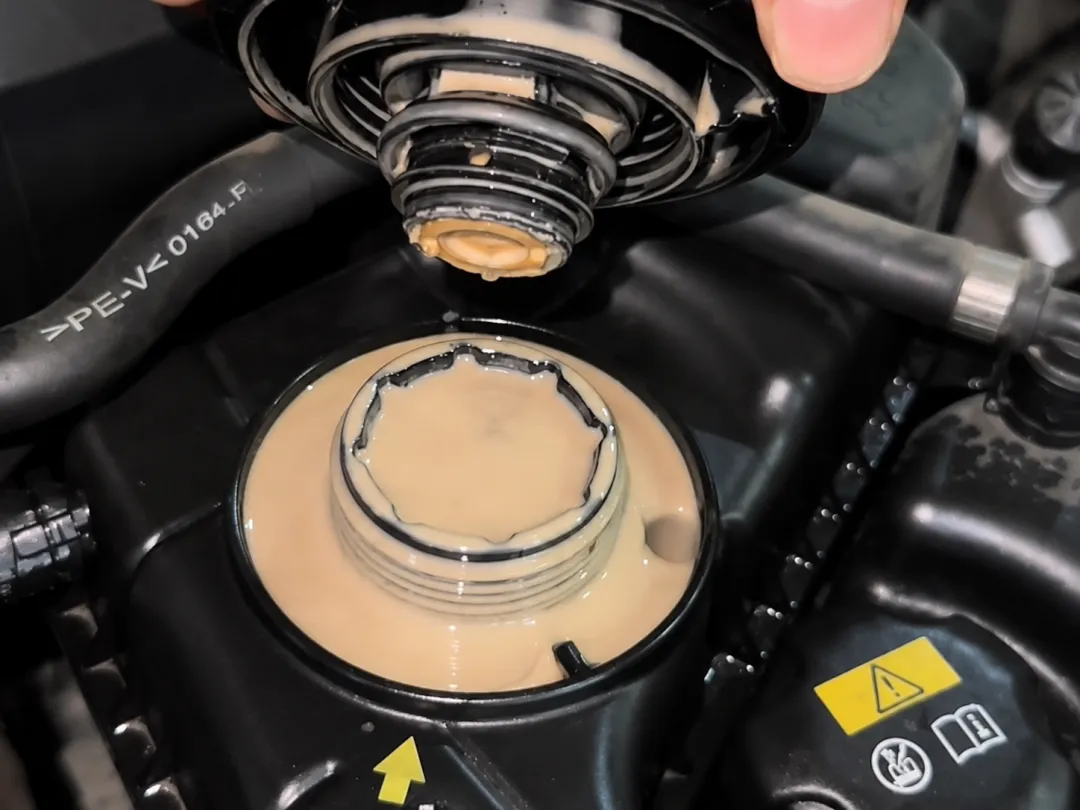
长期不更换冷却液或不同类型冷却液混用,都可能破坏冷却液原有的防腐性能。冷却系统中的杂质和腐蚀产物还会侵蚀机油散热器内部金属隔层,严重时会导致机油通道与冷却液通道相互窜通,出现机油与冷却液混合的问题。
Failing to replace the coolant for a long time, or mixing different types of coolant, may reduce or destroy its original corrosion-inhibiting properties. Contaminants and corrosion by-products in the cooling system can also attack the internal metal partitions of the oil cooler. In severe cases, the oil and coolant passages may become interconnected, causing engine oil and coolant to mix.
03
通道堵塞
Blocked Internal Passages
机油长期不更换容易产生油泥、积碳和金属杂质;冷却系统中也可能形成水垢、锈蚀物或沉积物。这些杂质进入机油散热器后,可能堵塞内部细小通道,导致机油或冷却液流通不畅,油温逐渐升高。
Failing to replace the engine oil for a long time can lead to the buildup of sludge, carbon deposits, and metallic contaminants. Scale, rust particles, and other deposits may also form within the cooling system. Once these contaminants enter the oil cooler, they can block its narrow internal passages, restrict the flow of engine oil or coolant, and gradually cause the oil temperature to rise.
04
配件质量问题
Component Quality Issues
如果机油散热器本身材料强度不足、焊接工艺不良,也可能出现内部泄漏、壳体开裂或使用寿命较短等问题。
If the oil cooler is made from materials with insufficient strength or is manufactured using substandard welding processes, it may develop internal leaks, housing cracks, or a shortened service life.

机油散热器故障后,会带来哪些问题?
What Happens When the Oil Cooler Fails?
车辆出现以下现象,大概率是机油散热器故障了:
If the vehicle exhibits any of the following symptoms, there is a strong possibility that the engine oil cooler is malfunctioning:
机油散热器周围出现油渍或冷却液痕迹
Oil stains or traces of coolant are visible around the oil cooler.
机油消耗量明显增加
Engine oil consumption increases noticeably.
冷却液液位频繁下降
The coolant level drops frequently.
防冻液壶内出现黑色油污或油膜
Black oily contamination or an oil film appears in the coolant expansion tank.
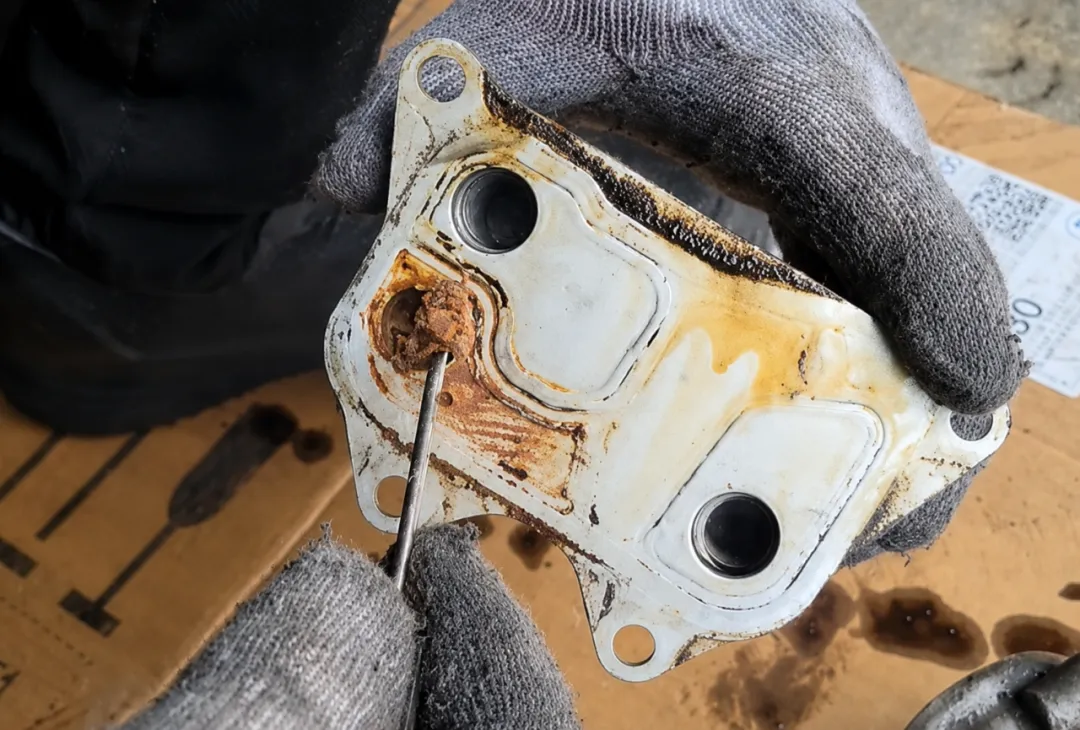
机油加注盖内侧出现乳化乳白色混合物
A milky, emulsified residue is found on the inner surface of the oil filler cap.
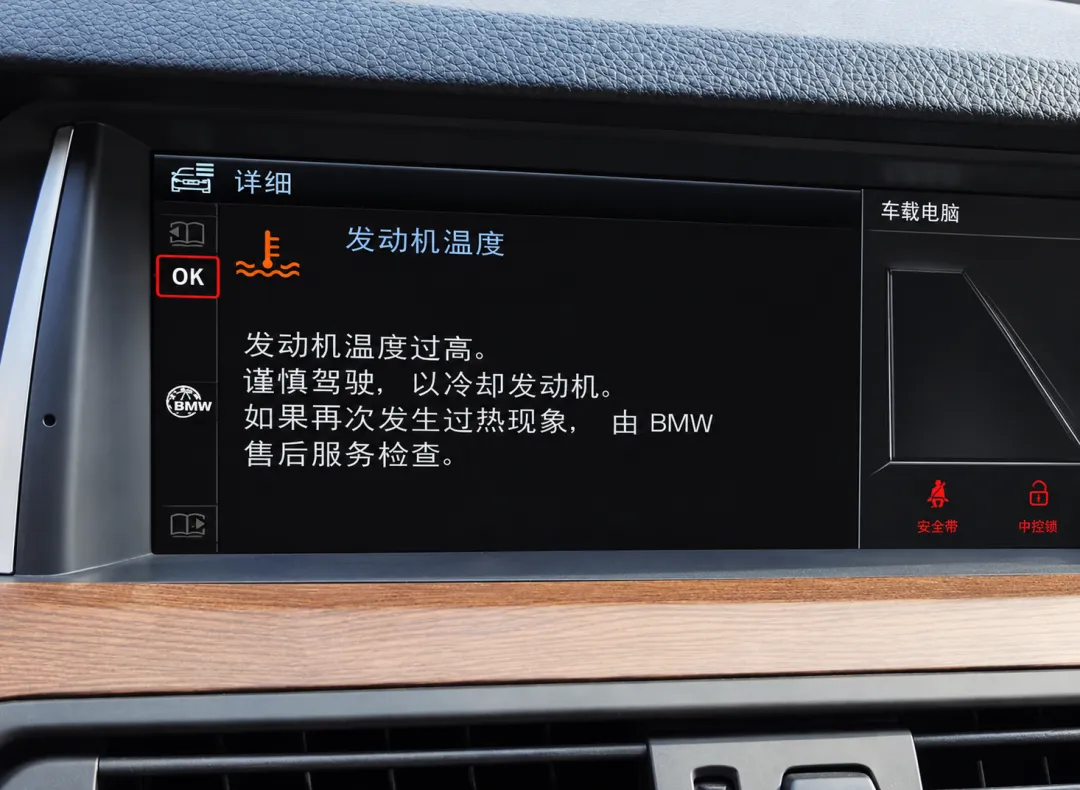
发动机水温偏高,甚至出现高温报警
Engine coolant temperature rises above normal, potentially triggering an overheating warning.
仪表出现机油压力、冷却液液位或发动机故障指示灯
Warning indicators for engine oil pressure, low coolant level, or engine malfunction illuminate on the instrument cluster.
多久更换一次及如何保养
Replacement Interval and
Maintenance Tips
机油散热器通常没有固定更换周期,正常情况下,只要没有渗漏、堵塞、腐蚀或油水混合,可以继续使用。
The oil cooler generally has no fixed replacement interval. Under normal conditions, it can remain in service as long as there are no signs of leakage, blockage, corrosion, or oil and coolant mixing.
如何保养
How to Maintain the Oil Cooler
01
严格按照车辆保养手册周期更换机油、机油滤清器。
Replace the engine oil and oil filter strictly according to the maintenance intervals specified in the vehicle owner’s manual.
02
应使用符合车型要求的冷却液,避免随意加水或混用不同规格的冷却液,并定期检查冷却液液位和清洁程度。
Use coolant that meets the vehicle manufacturer’s specifications. Avoid adding plain water or mixing coolants of different types or specifications. Regularly check the coolant level and condition.
03
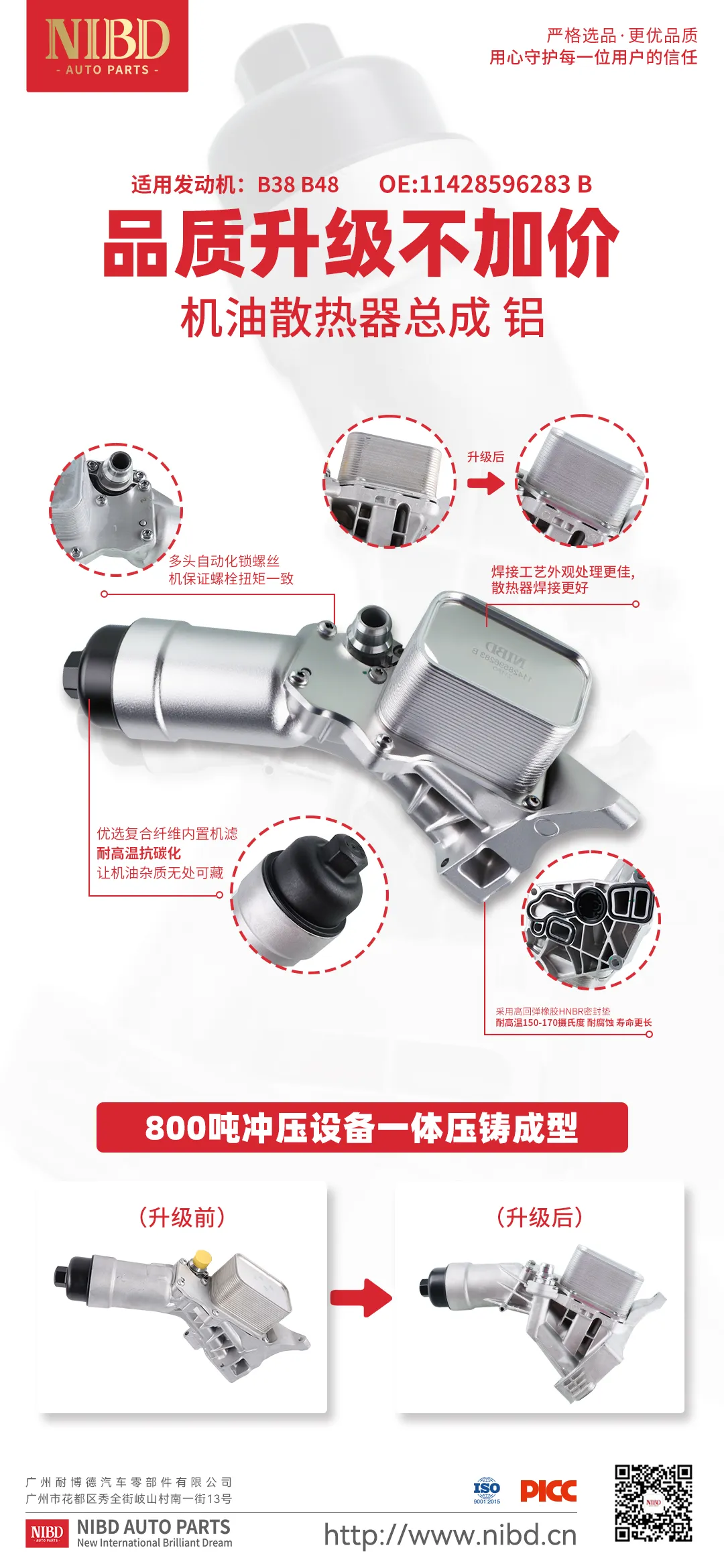
日常留意机格底座、机油散热器及发动机周边,观察有无机油、冷却液渗漏痕迹,并结合车辆实际使用情况,必要时更换耐博德机油散热器。
Regularly inspect the oil filter housing, oil cooler, and surrounding engine components for signs of engine oil or coolant leakage. Based on the vehicle’s actual operating condition, replace the NIBD oil cooler when necessary.
小tips

机油散热器连接着发动机的润滑系统与热管理系统当车辆出现机油温度偏高、冷却液内有油污、机油乳化或机油滤清器座附近渗漏时,应进行系统检查。
及时发现故障、准确判断泄漏位置,并规范清洗机油与更换相关配件,才能真正解决问题,避免小部件故障进一步演变为发动机大修。
The oil cooler connects the engine’s lubrication system with its thermal management system. If the vehicle shows signs such as excessively high oil temperature, oil contamination in the coolant, emulsified engine oil, or leakage around the oil filter housing, a comprehensive system inspection should be carried out.
Only by identifying the fault promptly, accurately locating the source of the leak, thoroughly cleaning the contaminated oil and coolant circuits, and replacing the relevant components according to proper procedures can the problem be fully resolved and a minor component failure be prevented from developing into major engine damage or an expensive overhaul.
END
耐博德公众号不定时推送
更多关于奔驰宝马汽车配件
-关注公众号或后台咨询-